The 2026 Trends Defining Fashion

The 2026 Trends Defining Fashion

Crazy to think we’re already rounding up the first week of 2026. My last piece was back in November, and since then, my attention has been almost entirely on launching club Goldfoil which, by the way, is finally starting to look like the kind of thing I always imagined. But with a new year comes that familiar anticipation - the feeling that something in fashion is about to shift again. We’re just weeks away from Fashion Weeks kicking off in London, Paris, Milan, and New York, when the industry collectively decides what the rest of us will be wearing, posting, and pretending we discovered first. Fashion in 2026 feels different already. You can sense the tug-of-war between restraint and indulgence, quiet luxury slowly stepping aside while metallics, sculptural tailoring, and statement accessories fight for attention. Designers are leaning into individuality again, blurring old boundaries between streetwear and couture, sustainability and status. The result? A year that promises both nostalgia and novelty, where the 2026 fashion trends aren’t just about what we’ll buy, but what they say about where we are right now. We’re also seeing a quiet retreat from oversized silhouettes. Think less baggy denim, sports jackets, and slouchy cashmere co-ords in favour of sharper layering and more deliberate structure. Capes are back. Leather is everywhere. Outfits feel romantic yet restrained, with cut-outs and sculpted fabrics that reveal just enough. It’s fashion’s way of flirting with sensuality again, but doing it with discipline. Here is what’s in my diary: Bright hues Tom Ford (L), Tory Burch (R) One thing the SS26 collections make clear: colour is back, unapologetically. Yves Klein Blue is everywhere, hot pink refuses to fade (thank you, Barbie), and the spectrum has expanded - bold yellows, acid greens, and punchy purples are seeping into our wardrobes. There’s a playfulness to it all, a nod to ’90s cartoons and early 2000s optimism. After years of muted palettes and monochrome minimalism, it feels like designers are ready to have fun again, and they’re inviting us to do the same. Dior (L), Loewe (R) Drapes Dior (L) Mugler (R) One thing quietly taking over the runways this season is movement - fabrics that twist, gather, and fall in ways that feel less engineered, more alive. It’s not about structure anymore; it’s about fluidity, clothes that respond to the body rather than contain it. After years of rigid tailoring and oversized fits, this softer approach feels like fashion finally exhaling. At Dior, JW Anderson’s first collection had outfits twisting, bending, and draping in all directions, creating intricate silhouettes that struck a careful balance between shape and bold colour. Draped fluid dresses made it clear: you don’t need a fixed shape to make an impression. Every sway and turn becomes part of the look - less power suit, more power flow. Band Jacket Ann Demeulemeester (L), Alexander McQueen (R) The marching band jacket is officially the jacket of 2026. If that feels like déjà vu, you’re not wrong. I remember 2023, when the H&M × Paco Rabanne collaboration brought this silhouette into the mainstream, with shoppers literally scrapping in the aisles to get their hands on one. Now, we’re seeing the trend emerge on runways at Kenzo, Ann Demeulemeester, McQueen, and beyond. What I love about this jacket is how much personality it brings to an outfit. You can build a look around a simple tee and trousers, and the jacket still steals the show. Its structured drama, playful detailing, and confident flair make it a piece that doesn’t need much else to shine. In 2026, the marching band jacket isn’t just outerwear - it’s a statement of character. Surf suits Loewe (L), Rabanne (R) The sea is officially coming to land. From the tropical florals at Celine to the scuba-like textures at Loewe, designers are translating ocean energy into summer dressing. It is not just about staying cool in rising temperatures. The focus on technical fabrics, playful layering, and unexpected shapes is what makes this trend feel fresh. At Paco Rabanne, surf suit material was folded into pants, turning functional sportswear into something entirely street-worthy. The result is clothing that looks like it belongs on a boardwalk but works just as well in the city and might even make you want to catch a wave. Cutouts Jean Paul Gaultier (L) Jil Sander (R) Cutouts are back, but 2026 has a new approach. Designers are moving away from random slashes and oversized peek-a-boos, focusing instead on one or two deliberate openings that feel sculptural and purposeful. At Tom Ford, a plunging neckline is paired with a single side cutout, creating a subtle yet striking silhouette. Meanwhile, Jil Sander plays with layering, using strategic openings to reveal an embellished bra or a textured underlayer, turning undergarments into part of the outfit. It’s a clever way to show skin without overdoing it, combining elegance and edge in equal measure. Capes Balenciaga (L), Dior (R) Capes are taking a more elevated turn. This season they cover bare shoulders, swoop dramatically down backs, or simply arrive to complete an outfit with a maximalist, luxe touch. At Jonathan Anderson’s Dior debut, fluid capes were layered over denim mini skirts and jeans, giving structure to casual pieces while keeping the drama intact. Balenciaga’s SS26 lineup reinforced the trend with leather cape coats and sculptural tops, turning an otherwise dramatic silhouette into something wearable and modern. In 2026, a cape isn’t just an extra layer - it’s the piece that transforms a look, adding sophistication, movement, and just the right hint of spectacle. Leather Altuzarra (L), Givenchy (R) Leather is having a moment in Spring 2026, and designers are proving it’s not just for fall. This season, we’re seeing leather in skirts, tops, jackets, and even capes, played in a range of grains and textures that feel tactile and luxurious. Classic black is still present, of course, but it’s joined by deep reds, muted greens, rich browns, and even softer tans, turning the material into a surprisingly versatile spring layer. Leather is being reimagined as both structure and statement, whether it’s a sculpted jacket anchoring a look or a flowing skirt adding weight to airy spring pieces. It’s the kind of material that can read tough or refined depending on how you style it, which is exactly why it’s dominating the runways this season.
WOLF x Liberty: Craft and Legacy in Contemporary Luxury

WOLF x Liberty: Craft and Legacy in Contemporary Luxury

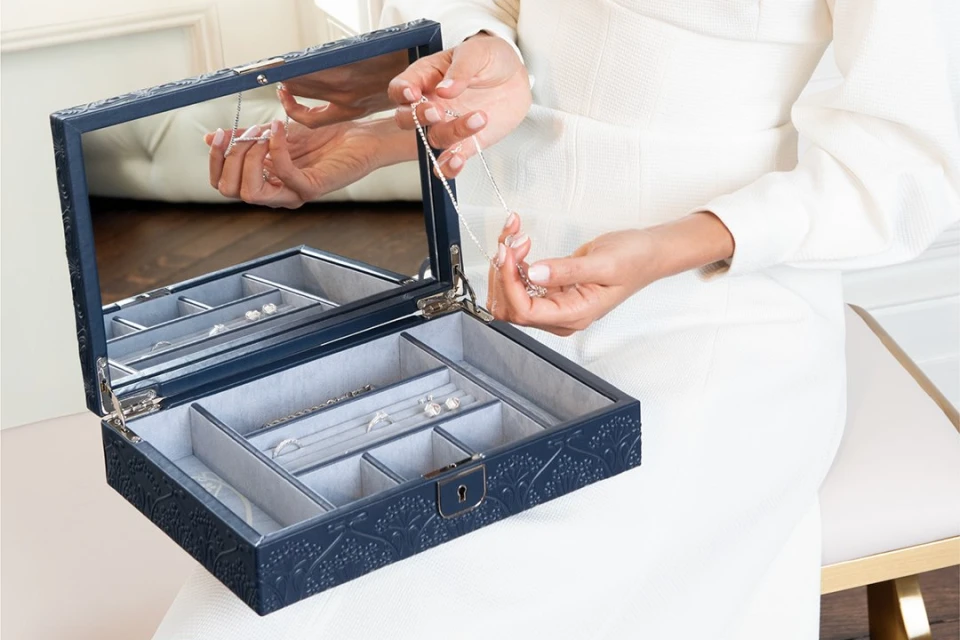
When two names as storied as WOLF and Liberty meet, the result is more than a collaboration: it is an affirmation of heritage in an age of fleeting trends. WOLF, the family-owned house that has been creating jewellery cases and watch winders since 1834, and Liberty, the London institution celebrating its 150th anniversary this year, share a common philosophy: beauty and craft must endure. It’s the marriage of two heritage-rich British brands that have always been about more than just beautiful objects. They’re about storytelling, legacy, and the small rituals that turn everyday life into something exquisite. I met Simon Wolf, the fifth-generation CEO of his family’s business, just before the launch. There’s a steadiness about him, the kind you only find in people carrying nearly two centuries of tradition on their shoulders. “This collection is about more than looking after your jewellery,” he explained. “It’s about design that lasts, and design that means something.” That conviction is embedded in WOLF’s history: when Philipp Wolf I began his boxmaking business in 1834, it was with the belief that the way you present something is as important as the object itself. For Liberty, the timing could not be more significant. The store, with its Tudor revival façade and labyrinth of patterned interiors, has become London’s most eccentric temple of taste. This year’s 150th anniversary is marked by a calendar of exhibitions and collaborations, all honouring Arthur Lasenby Liberty’s mission not to follow fashion, but to define it. In that spirit, WOLF feels like a natural partner—another house rooted in the belief that design should endure across generations. The collection itself takes two of Liberty’s most celebrated prints and translates them for a contemporary audience. Ianthe , a swirling Art Nouveau motif, is embossed onto sustainable leather in navy and burgundy, while Julia , a 1930s floral, is reimagined in sage green. Jewellery boxes, watch rolls, travel cases and portfolios are finished with silver or gold hardware, each piece lined with Liberty’s unmistakable detailing. They are objects of daily use designed with longevity in mind, thanks to WOLF’s patented LusterLoc™ technology, which protects jewellery from tarnishing for up to 35 years. For Pere Bruach, Liberty’s Design Manager, the collaboration was about more than simply selecting prints. “I was inspired by the metalwork and jewellery of Archibald Knox, a key figure in Liberty’s design legacy,” he said. That influence can be felt in the engineering of the embossed leather, where Liberty’s decorative vocabulary meets WOLF’s functional precision. Together, the brands have created a collection that feels both archival and forward-looking. It’s not seasonal, not trend-led, but purposeful - a quiet kind of luxury that acknowledges the value of history while offering something entirely suited to modern life. The WOLF x Liberty collection is available now at wolf1834.com, Liberty, and select retailers worldwide, with prices ranging from £169 to £945.
Topshop’s Return to the Runway: A Nostalgia Trip We Didn’t Ask For

Topshop’s Return to the Runway: A Nostalgia Trip We Didn’t Ask For

Not sure if anyone noticed or cared, but Topshop staged a runway show last week. Yes, Topshop, once the crown jewel of British high street fashion and the Oxford Circus temple where teenagers dragged their parents on Saturday afternoons, made its post-pandemic debut with a splashy open-air spectacle in Trafalgar Square. This was billed as an “iconic” comeback. The British Fashion Council, now under new leadership after Caroline Rush stepped down earlier this year, treated it as a symbolic moment. London fashion was supposedly reclaiming its rightful place on the global stage. The Mayor of London even turned up to bless it all, as though Topshop had revived the industry from the dead. But here’s the thing: nobody was asking for Topshop to come back. And certainly not like this. A Brand Frozen in Time Topshop was once shorthand for accessible cool, the brand that could keep up with the catwalk at a price teenagers could reach with a weekend job. But that was before Shein. Before TikTok micro-trends. Before dropshipping became a business model. Back then, the competition was Zara, H&M, maybe Bershka. Today, the high street is flooded with ultra-fast-fashion retailers producing clothes faster than anyone can scroll through them. In that context, Topshop’s runway show felt like a relic. Rather than offering something new, it leaned heavily on nostalgia. The target audience seemed to be thirty-somethings who once trawled the racks at Oxford Circus while their eardrums were assaulted by blasting indie rock. The problem is simple: we have moved on. The idea that Topshop could turn the clock back is naïve at best and insulting at worst. Ownership Matters Then there is the ownership question. The media painted this as a British fashion revival. But Topshop is now majority-owned by Heartland, the investment company of Danish billionaire Anders Holch Povlsen. ASOS still holds 25 percent, but this is no longer a British brand. To present it as a patriotic victory for London fashion is misleading if not cynical. And Heartland’s first big move? Positioning Topshop inside Liberty. Yes, Liberty, the heritage department store synonymous with craftsmanship, rarity and artistry. Pairing Liberty with a fast-fashion label whose website still cannot produce a coherent sustainability statement is baffling. It weakens Liberty’s prestige while doing nothing to elevate Topshop. Sustainability Theatre Michelle Wilson, a spokesperson for Topshop, has claimed the brand’s higher prices reflect a more sustainable and better-paid supply chain. Customers, she said, are willing to pay for superior quality. Yet the website is silent on sustainability, fair trade, or basic transparency. If this is a new ethical direction, it is absent from anywhere consumers might read about it. Instead, what we saw on the runway was a parade of plastics. Faux leather, faux fur, polyester. If the point was to convince us Topshop had grown up, it only reinforced that the brand remains addicted to cheap synthetics that clog wardrobes and landfills. The opening look was a bubbled faux-leather jacket over a polka-dot dress, tights and boots. The entire composition was synthetic. Topshop used to sell real leather jackets. Now we are offered recession-core knockoffs at PrettyLittleThing prices. The second look was a floor-length Grinch-green faux fur coat at £140. It screamed Love Island circa 2018, not 2025. The third look was the one redeeming moment. A pair of jeans with a decent fit. Denim has always been Topshop’s strong suit. But one good pair of jeans does not justify a runway show. Styling and Inclusivity Beyond the fabrics, the styling was equally uninspired. It felt like a mood board pieced together by someone who last set foot in a Topshop dressing room a decade ago. The references were clear, but the execution lacked freshness. Nostalgia is a powerful tool, but not if the clothes make you nostalgic for the landfill. Inclusivity is another problem. ASOS once built credibility with tall, petite and maternity ranges. Topshop’s relaunch cuts off at size 18. For a brand trying to prove relevance, ignoring large parts of the customer base is a curious choice. Final Thoughts Topshop wanted this show to be its triumphant re-entry into cultural conversation. Instead, it raised uncomfortable questions. Who is this for. What does it stand for. And why should we care. The nostalgia might tug at a few heartstrings. But fashion has moved on. Transparency, innovation and inclusivity are what matter now. Polyester dresses on a runway in 2025 are not enough. Until Topshop figures that out, this is not a revival. It is a rerun.

Subscribe to our Newsletter

GENARO RIVAS SS26: A Feast For Crows

GENARO RIVAS SS26: A Feast For Crows

On a warm Monday in mid-summer, Genaro Rivas returned to London with A Feast for Crows —his Spring/Summer 2026 menswear collection, presented in a deconsecrated church in Covent Garden. The Peruvian designer, recently awarded the Vogue Business x Visa Young Creators prize, continues to explore purpose-driven fashion, this time focusing on denim as a new material within his established sustainable practice. Following a preview at Berlin Fashion Week, the London show revealed a collection crafted entirely from recovered and sustainable denim, shaped through zero-waste pattern cutting, hand embroidery, 3D printing, and laser engraving. From fabric sourcing to finishing, every step embraces circularity and conscientious production, with 95% of the labour led by women across Peru and London. The result is a collection that feels both technically meticulous and deeply considered—an authentic continuation of Rivas’s commitment to ethical creation. The first two looks presented a subtle tension between contrast and cohesion. Both grounded in black denim, the opening outfit layered unexpected textures: denim shorts peeked out from beneath sheer, flowing trousers, paired with a long-sleeve top and a face mask that obscured the wearer’s identity, lending an enigmatic edge. By contrast, the second outfit felt lighter and more playful. An unbuttoned denim jacket, edged with a white fringe detail, sat atop sleek black denim jeans echoing the same triangular fringe motif. The embellishments hinted at a nod to the designer’s Peruvian heritage, weaving tradition into modernity with a subtle but striking gesture. As the collection unfolded, hardware became a key detail - rings of varying sizes, safety pins, and oversized metal buttons punctuated the denim with a rebellious edge. One look that truly caught my eye was a long-sleeve white top with exaggeratedly long sleeves peeking out from beneath a wide-open denim shirt. The white top’s scrunched texture and asymmetric taper created a striking contrast against the loose, blue denim shirt, which was boldly adorned with safety pins. The interplay of textures and shapes here made for a captivating, unexpected combination. Several outfits played with the tension between rugged workwear and traditionally tailored pieces like blazers. One of the standout looks, highlighted in the press release, was a black blazer that balanced deconstruction and detail. Unbuttoned but held together by safety pins, it featured laser-etched reinterpretations of two iconic raven artworks - Raven (1831) by Robert Havell, Jr., and Le Corbeau (1875) by Édouard Manet - mirrored on either side of the jacket. Skinny fabric trimmings cascaded across the piece, creating an illusion of secrecy that echoed motifs introduced earlier in the collection, weaving a sense of mystery into the sharp tailoring. Another standout was a blazer adorned with decorative safety pins at the top, its buttons replaced by multiple silver rings. A long row of rings and safety pins ran down the trousers, bringing 80s punk chic vividly to life - raw, edgy, and utterly captivating. Love. I was particularly taken with the closing look: a pinstripe black suit with trousers so wide and long they seemed almost impractical, exactly the rebellious silhouette I was hoping for. It was show-stopping, loud, and unapologetically bold, like someone strutting down the street with confidence to spare.
Locke x Anthropologie Launch Luxe Lisbon Pop-Up

Locke x Anthropologie Launch Luxe Lisbon Pop-Up

It was only a matter of time before Anthropologie took its free-spirited, citrus-scented dreamworld out of the shopping cart and into the bedroom—literally. The retailer has just teamed up with Locke, the design-minded aparthotel brand known for its influencer-adjacent interiors and portable co-working culture, to launch a shoppable suite in Lisbon. Because why just stay in a hotel when you could live in a content-ready Pinterest board? Enter the Locke x Anthropologie Suite at Locke de Santa Joana , the brand’s biggest property to date, which sits just off Lisbon’s Avenida da Liberdade like a boho-fabulous oasis for people who own more than one scented candle and have strong opinions about jute. The one-bedroom terrace suite—available for bookings through 30 September—comes wrapped in what Anthropologie is calling a Mediterranean makeover, though you could also file it under “elevated brunch-core.” Think: striped glass candle holders, juice glasses printed with fruit motifs, and an ‘al fresco in Positano’ colour palette that makes you want to order a €9 peach bellini and discuss your recent ceramic phase. Everything in the suite is for sale, of course—this is 2025, and brands don’t just create experiences anymore; they curate cartfuls. The bedding, the art, the plates, the outdoor furniture… if you like it, you can probably buy it, monogram it, and ship it home in time for your next garden dinner party. Featured items include the “Clara” mirror (for those post-shower selfies), the “Vela” jute rug (the aesthetic equivalent of a deep exhale), and a smattering of playful wall art featuring sardines, peaches, and shrimps, as if the entire room just came back from a beach market with too many tote bags. The hotel itself—Locke de Santa Joana—isn’t short on talking points either. Housed in a reimagined 17th-century convent, the 370-room destination is part design temple, part cultural playground, with a co-working space, restaurants, music venues, and a courtyard pool that looks genetically engineered for Instagram Stories. Interiors are the work of Spanish design darling Lázaro Rosa-Violán, who has artfully blended ecclesiastical bones with contemporary flair—though you’re unlikely to be thinking too hard about architectural legacy once you’re reclining poolside next to your “Lottie” side table sipping orange wine out of an Anthropologie ‘Icon’ glass. According to Locke brand manager Carla Read, the collaboration with Anthropologie was “instinctive,” which makes sense—both brands speak fluently in the language of aesthetic escapism. “We’re always looking for ways to bring our brand to life beyond the store,” Anthropologie’s Leanne Mascoll added. Translation: experiential retail is in its Lisbon era. So is this the future of travel? A hotel stay where every throw pillow is a potential purchase and your entire holiday becomes one long product demo? Possibly. But if you’re going to be seduced by consumerism, at least let it happen somewhere with a private terrace and a Portuguese seafood dinner set. This summer, Lisbon is selling a dream—and it’s got Anthropologie written all over it.
London’s Top Wimbledon Pop-Ups and Launches For Summer 2025

London’s Top Wimbledon Pop-Ups and Launches For Summer 2025

Wimbledon is more than just a tennis tournament—it’s a cultural moment in London’s summer calendar where fashion, lifestyle, and sport collide in effortless style. Every year, brands bring their A-game with exclusive collections, pop-ups, and limited-edition launches that capture the tournament’s preppy elegance and spirited energy. From vintage-inspired apparel to curated dining experiences, Wimbledon 2025 is shaping up to be a feast for fans who want to see and be seen, on and off the courts. This season, the city’s style set has plenty to get excited about. Whether it’s sport-tech tenniswear with a streetwear twist, sustainable capsules by tennis stars themselves, or alfresco terraces perfect for sipping Pimms between sets, London’s Wimbledon offerings invite everyone to join in the celebration of this iconic event. Here’s a curated guide to the best launches and pop-ups you don’t want to miss. Ralph Lauren Wimbledon 2025 Ralph Lauren has brought its signature preppy elegance to Wimbledon 2025 with a full lifestyle takeover, from a live-screening café pop-up on New Bond Street to an alfresco dining terrace within the tournament grounds. The brand’s flagship store has been wrapped in court-green stripes and transformed into a chic viewing hub, while the Café at Ralph Lauren in Wimbledon’s Southern Village serves up iced lattes, cream teas, and custom-embroidered polos just steps from the action. As the Official Outfitter, Ralph Lauren’s presence this year blurs the lines between sport, fashion, and refined hospitality. Lacoste Djokovic’s Signature Polo & Shorts Let’s be honest: you’re not buying Djokovic’s on-court kit because you plan on replicating his serve. This is about looking like you could. His polo and matching shorts are all clean lines and crisp whites, the fashion equivalent of “I holiday in the south of France and drink espresso at 10pm.” Functional? Sure. But mostly, they're just really good for walking around Notting Hill pretending you own a tennis club. adidas London Originals Collection This drop is what happens when vintage tennis style gets the streetwear edit. Think retro pleated skirts, mesh tank tops, and zippered jackets in Wimbledon’s signature palette—green, white, and nostalgia. There are headbands, too, because someone at adidas understands that Wimbledon is as much about the hair as the hits. Kith x Wilson 2025 Tennis Collection Launching June 20, this is what you wear when you want to look like a tennis pro but feel like a downtown art dealer. The collection includes everything from performance-ready polos to green-and-white cardigans that whisper “Hamptons adjacent.” The rackets are beautiful. The bags are aspirational . The whole thing is lifestyle cosplay, and that’s why we love it. Gucci & Brunello Cucinelli Wimbledon Knit Capsules Last year’s knitwear drops from Gucci and Brunello Cucinelli are still quietly dominating match-day chic. Ivory cardigans with tennis badges, wrap sweaters that say “I’m cold, but curated”—these are layers for the person who would never actually run for cover in a rain delay. Limited editions, yes, but available on resale for those who like their luxury with a bit of a hunt. Elina Svitolina + Svitlana Bevza Capsule Ukrainian tennis royalty meets minimalist fashion in this refreshingly understated collection. Svitolina and Bevza co-designed sleek, sustainable pieces in crisp whites—think reimagined polo dresses and structured vests. Proceeds support her tennis foundation, which makes it officially fashion that gives back while looking better than you . Fred Perry Tennis Heritage Polos Fred Perry continues its slow-burn seduction of the heritage set with 1952-style polos that basically invented Wimbledon aesthetic. The pique fabric and classic fit are eternally flattering, whether you're watching the match or walking to Waitrose pretending you’re late for one. ALIGNE The Rosia Linen Dress If you need a dress that says “I’m only here for the Pimm’s,” the Rosia linen number from ALIGNE is it. The white drop-waist silhouette is unfussy, flattering, and £149—enough to feel considered, not flashy. Also in the capsule: a broderie co-ord and cotton midi skirt, all ready for sun-drenched outfit repeats. Harvie & Hudson Wimbledon Menswear Collection British tailoring gets the tennis memo with Harvie & Hudson’s smart, lightweight menswear drop. From seersucker blazers to polished separates that somehow make sweating seem elegant, it’s the kind of collection where even the casual trousers look like they’ve read Tatler . L’ETO Tennis Ball Dessert Macaron In what may be the most extra Wimbledon dessert of 2025, L’ETO has crafted a tennis ball-shaped ice cream macaron in matcha and vanilla, served with strawberries, naturally. It’s the kind of thing you order “just to try” and then photograph like it’s a guest at the table. Strawberries & Screen Duke of York Square If you're not actually going to Wimbledon, this is the next best thing. Giant outdoor screens, gourmet street food, and the kind of crowd that dresses for the highlight reel. Pimm’s, strawberries, and lots of linen—this is how Chelsea does a public viewing. Great Scotland Yard Hotel Wimbledon Afternoon Tea Because nothing says summer in Britain like a Wimbledon-themed tea served with edible tennis balls. Created in collaboration with Lavazza, the tea includes quiches, truffle sandwiches, and Pimm’s drizzle cake that will make you wonder why you ever bothered with plain scones. CROÍA The Tennis Club Jewellery Capsule Just in time for Wimbledon, Irish label CROÍA launched a jewellery collection that’s basically “tenniscore” in accessory form. Rhinestone huggies, stackable bracelets, tarnish-proof everything—designed to be worn with both tennis whites and Tuesday meetings. Proof that you don’t need to break a sweat to serve a look.